What Makes a "Real Man" in Today's Society?
Michael J Donovan, PhD
1/2/20268 min read
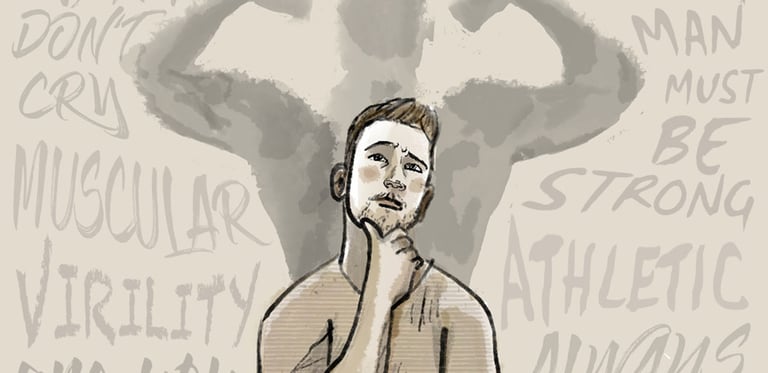
The question of what constitutes a "real man" has become one of the most contested and consequential conversations in contemporary culture. From social media debates to academic discourse, from locker rooms to therapy sessions, people are grappling with masculinity in ways that would have seemed impossible just a generation ago. The traditional scripts that once defined manhood have been challenged, deconstructed and in many cases abandoned, leaving many men uncertain about what masculinity should look like in the 21st century.
This isn't just an abstract philosophical question. The way we answer it shapes how boys are raised, how men understand themselves, how relationships function and how society addresses everything from mental health to workplace dynamics to violence. The stakes are real and the confusion is genuine.
The Traditional Template and Its Unraveling
For most of human history, the definition of a "real man" was remarkably consistent across cultures, even if the specific expressions varied. A real man was a provider and protector. He was physically strong, emotionally stoic, professionally successful and dominant in his household. He didn't cry, didn't show weakness, didn't ask for help. His worth was measured by his ability to support a family, command respect and maintain control over his emotions and his environment.
This template wasn't entirely arbitrary. It emerged from material conditions where physical strength mattered for survival, where single-income households were the norm, and where clearly defined gender roles seemed to offer stability and order. Many men found genuine purpose and identity within this framework, and many families functioned well under these arrangements.
This traditional model also came with significant costs that we're only now fully reckoning with. The pressure to suppress emotions contributed to epidemic levels of male loneliness, depression, and suicide. The emphasis on dominance and control enabled domestic violence and toxic relationship dynamics. The narrow definition of success left many men feeling like failures if they couldn't achieve a particular economic status and the whole framework depended on women remaining in subordinate roles, which was both unjust and unsustainable.
As women entered the workforce in large numbers, as service economies replaced manufacturing ones, as therapy became destigmatized, and as cultural values shifted toward equality and emotional intelligence, the traditional masculine template began to crack. Many men welcomed these changes and adapted readily. But for others, the transformation has felt like the ground disappearing beneath their feet.
The Backlash and the Void
When traditional masculinity comes under critique, some men hear it as an attack on maleness itself. The phrase "toxic masculinity" which was originally meant to describe specific harmful behaviors rather than masculinity as a whole, has often been interpreted as a wholesale condemnation of men. This has created a defensive posture where any discussion of masculine norms feels threatening.
Into this void rushed a thriving industry of masculine reassurance. From self-help gurus to podcast hosts to social media influencers, a new generation of voices has emerged promising to tell men what they need to hear, that traditional masculinity isn't toxic, that men are under attack, that reclaiming "real" manhood means rejecting modern "weakness" and embracing timeless masculine virtues. Some of these voices offer genuinely valuable insights about male psychology and the importance of purpose and discipline. Others peddle a reactionary fantasy that solves men's real struggles by blaming feminism, cultural change, or men who don't fit the traditional mold.
The problem with much of this discourse is that it tries to resurrect a model that no longer fits the world we actually live in. We're not going back to single-income households as the norm. We're not going back to women having limited options outside the home. We're not going back to a world where men can avoid reckoning with their emotions. The question isn't whether to preserve or reject traditional masculinity wholesale, but rather what we want to carry forward and what we need to reimagine.
Toward a More Expansive Vision
So what does a healthy, sustainable, authentic masculinity look like in today's world? Rather than offering a single prescriptive answer, which would simply replicate the rigidity of the old model, perhaps we need to think about masculinity as something more flexible and varied while still acknowledging that men as a group face certain common experiences and challenges.
Strength that includes vulnerability. One of the most important shifts in thinking about masculinity involves reconceiving strength not as the absence of vulnerability but as the capacity to be vulnerable when appropriate. A man who can acknowledge when he's struggling, who can ask for help, who can admit when he's wrong, who can express fear or sadness or uncertainty, isn't weak. He's demonstrating the kind of courage that actually requires more internal strength than emotional suppression. Research consistently shows that men's reluctance to seek help whether for mental health issues, physical health problems, or relationship difficulties leads to worse outcomes across the board. Real strength means being honest about the full range of human experience.
Purpose beyond provision. While providing for loved ones remains a legitimate source of meaning for many men, defining masculinity primarily through economic success or breadwinner status leaves too many men feeling inadequate and creates too much anxiety about financial circumstances that are often beyond individual control. A more robust sense of masculine purpose might include provision but extend to mentorship, creativity, community service, caretaking, learning, or any endeavor pursued with commitment and integrity. The question isn't whether men need purpose, almost everyone does, but whether we can unhook masculine worth from narrow economic metrics.
Protection that's not possessive. The protector role remains deeply resonant for many men, and there's nothing inherently problematic about wanting to keep loved ones safe. But healthy protection looks different from the controlling, jealous, or violent behavior that sometimes gets justified under the guise of protection. Real protection means creating safety for others to be themselves, to make their own choices, to take appropriate risks. It means intervening against genuine threats, not against autonomy. It means recognizing that the people in your life aren't possessions to guard but individuals to support.
Connection over isolation. One of the most damaging aspects of traditional masculinity has been the way it encourages male isolation. Men often have fewer close friendships than women, are less likely to share emotional experiences with friends, and frequently rely almost entirely on romantic partners for emotional intimacy. This creates enormous pressure on relationships and leaves many men devastated when relationships end. Building meaningful friendships with other men, maintaining connections with family, participating in communities, these aren't optional extras but essential components of human wellbeing that men need to prioritize just as much as anyone else.
Competence in varied domains. There's value in developing skills and competencies, in being someone who can handle challenges and solve problems. But competence doesn't have to mean being good at traditionally masculine tasks like fixing cars or fighting. It might mean being an excellent cook, a skilled listener, a competent parent, a talented artist, or a dedicated learner in any field. What matters is the development of actual capabilities rather than the performance of competence in narrow, gendered ways.
Respect as reciprocal. Traditional masculinity often emphasized commanding respect through dominance, status, or intimidation. A healthier model recognizes that genuine respect is reciprocal and must be earned through how you treat others. This doesn't mean becoming passive or self-effacing, but it does mean recognizing that other people's dignity and autonomy matter as much as your own. Respect flows from integrity, consistency, reliability, and how you handle power when you have it.
The Real Diversity of Real Men
One of the most important recognitions in contemporary discussions of masculinity is that there's no single way to be a man. Gay men, trans men, men of different races and cultures, men with disabilities, men across the economic spectrum, they all experience and express masculinity differently. The attempt to define one universal standard has always been an exercise in exclusion, elevating one particular cultural version (usually white, straight, middle-class, American or European) as the norm and treating everything else as deficient. Acknowledging this diversity doesn't mean masculinity becomes meaningless or that anything goes. Most men do share certain common experiences related to how they're socialized, the expectations placed on them, and how they're perceived and treated. But the specific expressions of healthy masculinity can and should vary widely based on individual personality, culture, context, and choice.
The Challenge for Boys and Young Men
One of the most pressing concerns in discussions about masculinity is how we raise boys in this transitional moment. Many parents, teachers, and mentors feel caught between not wanting to impose rigid gender expectations and recognizing that boys often do have different developmental patterns and needs than girls on average. Boys in school are falling behind in many educational metrics, they're increasingly likely to feel disconnected and purposeless, and they're being targeted by ideological content that offers them certainty and belonging at the cost of resentment and rigidity.
Healthy masculine development probably involves several key elements. Boys need positive male role models who can demonstrate what healthy manhood looks like, not through lectures but through example. They need physical outlets and challenges that let them test themselves and develop confidence. They need to learn emotional literacy and interpersonal skills, not as something foreign to masculinity but as essential masculine competencies. They need to hear that their developing masculine identity is valuable while also learning that it doesn't require dominance over others or superiority to femininity. They need communities and traditions that can offer initiation into manhood in constructive rather than destructive ways. This is difficult work that requires intention and care, but getting it right matters enormously, both for individual boys' wellbeing and for the kind of society those boys will build as men.
Moving Forward
The conversation about what makes a "real man" will and should continue to evolve. We're living through a period of significant disruption in gender relations, and that disruption creates both opportunities and anxieties. The answer isn't to retreat to traditional models that no longer serve us or to pretend that masculinity is purely a social construct with no meaningful patterns or commonalities.
Instead, we might work toward a vision of masculinity that's both grounded and flexible: grounded in recognition of men's actual experiences and needs, flexible enough to accommodate the full diversity of male lives and expressions. This means taking seriously men's struggles with isolation, purpose, and identity without blaming those struggles on women's advancement. It means criticizing harmful masculine norms while affirming that masculinity itself has value. It means creating spaces where men can explore what manhood means to them without imposing a single answer.
A "real man" in today's society might be someone who is developing his capacities, contributing meaningfully to others' lives, building genuine connections, acting with integrity, and doing all of this while remaining open to growth and change. He's someone who can be strong without being domineering, confident without being arrogant, protective without being controlling, independent without being isolated. He's someone who understands that being a man is about character and choices rather than conformity to arbitrary standards.
Most importantly, perhaps, a real man is someone who can hold this question lightly enough to avoid rigidity while seriously enough to live intentionally. The point isn't to replace one narrow definition with another, but to create space for men to thoughtfully construct meaningful masculine identities that work for them, for the people in their lives, and for the world we're all trying to build together.
The question "what is a real man?" might ultimately be less important than the question "what kind of man do I want to be?" That's a question each person has to answer for themselves, with honesty, courage and care.