The Revolutionary Ordinariness: When Your Ikigai Is Simply Being Dad
Michael J Donovan, PhD
1/26/202615 min read
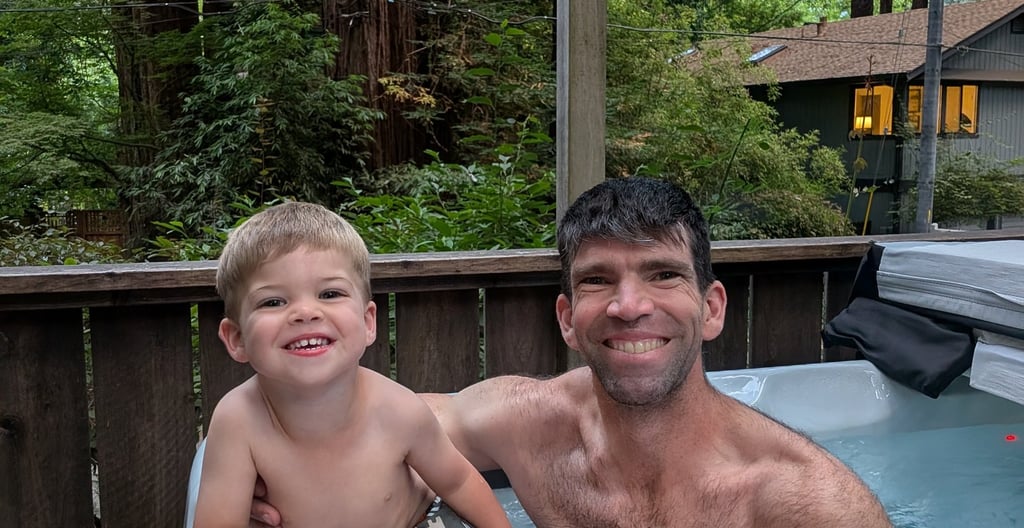
There's a moment that happens to many fathers, usually in the quiet hours after everyone else has gone to sleep. You're cleaning up the remnants of the day- toys scattered across the living room, dishes in the sink, a forgotten backpack by the door, and a question surfaces, sometimes as a whisper, sometimes as an accusation: Is this it? Is this all I'm meant to be?
We live in a culture that tells men their worth is measured in external achievements. The corner office. The impressive title. The salary that makes people's eyebrows raise. The startup exit. The creative breakthrough. The athletic achievement. The thing you can announce at a reunion that makes old classmates nod with respect or envy. Against this backdrop, saying "I'm a dad" feels insufficient. It's not that fatherhood isn't respected—it's that it doesn't count as an answer to the question of purpose. It's something you are in addition to your real identity, not the identity itself.
What if that's wrong?
What if your ikigai- your reason for being, the thing you love, the thing you're good at, the thing the world needs, the thing that can sustain you- is simply being a father? Not just any father, but a particular kind: a strong, emotionally in-touch male who shows other men what's possible? What if the most revolutionary thing you could do with your one life is to father well, and in doing so, model a different kind of masculinity?
The Devaluation of Fatherhood
Let's be honest about the cultural moment we're in. Fatherhood occupies a strange space in our collective imagination. On one hand, we celebrate it in greeting cards and sitcoms. On the other hand, we don't really treat it as serious work. Mothers get some recognition for the difficulty and importance of parenting, though still not nearly enough. For fathers, the cultural script is still largely that dads are secondary parents- helpful, sure, but not essential. Babysitters when mom is unavailable, rough-house partners, well-meaning but incompetent. The parent who gives the kids ice cream for dinner and forgets to check homework.
Even as these stereotypes have been challenged and many fathers have become deeply involved parents, there's still an underlying assumption that a man's real contribution to the world happens outside the home. Fatherhood is what you do with your leftover time and energy after you've done your actual work. This is why the question "What do you do?" is so loaded for stay-at-home fathers or men who've structured their work lives around being present for their kids. "I'm a dad" isn't accepted as a complete answer. The follow-up question is inevitable: "No, but what do you do?"
The implication is clear: fatherhood can't be your purpose. It's too ordinary, too domestic, too... small.
The Myth of Bigger Purpose
Here's where the cultural script runs into reality: many men who've achieved those supposedly bigger purposes- who've climbed the ladder, built the company, made the money, earned the recognition- report a haunting emptiness. They did what they were supposed to do, became who they were supposed to become and discovered it wasn't enough. Meanwhile, there are men who've found something different. Men who've discovered that being fully present for their children- not as a side project but as their central work- is exactly where their gifts and the world's needs intersect. Men who've found that the daily, unglamorous, repetitive work of fathering is where they come most alive.
These aren't men who've given up on ambition or settled for less. They've rejected a particular definition of ambition and discovered something more aligned with who they actually are. They're men who find deep satisfaction in being the steady presence their children can count on. Who feel purposeful when they're helping a struggling child work through big feelings. Who experience meaning in the bedtime stories, the scraped-knee comforting, the homework help, the teaching moments, the play. They're men who've discovered that their ikigai isn't something grand and distant- it's something immediate and intimate. It's in the daily practice of showing up for the small humans who depend on them.
What the World Needs: A Different Model of Masculinity
Here's where "just being a dad" becomes something more- not because fatherhood alone isn't enough, but because of how you father and what that modeling represents. We are in a masculinity crisis. The old models are broken. The strong-silent-type, the breadwinner who's emotionally absent, the man who mistakes stoicism for strength- these archetypes have produced generations of emotionally stunted men and the collateral damage that comes with that.
Young boys are growing up in a world that still largely tells them that being a man means suppressing emotion, avoiding vulnerability, proving toughness, maintaining control. They see masculinity modeled in action movies, sports culture, and political leaders who mistake cruelty for strength and dominance for leadership. What they need- what we all need- is a different model. They need to see men who are strong and tender. Men who can be protectors and nurturers. Men who are confident enough to be vulnerable, secure enough to apologize, grounded enough to feel their feelings without being overwhelmed by them.
They need fathers who show them that real strength includes emotional literacy. That being in touch with your feelings isn't weakness—it's the foundation of actual resilience. That you can be a man and also be kind, empathetic, present, and emotionally available. This is what your children need from you. And it's what other fathers need to see modeled. Because so many men want to be different fathers than their own were, but they don't know how. They lack the template. They're improvising without a script, trying to unlearn decades of conditioning about what men should be. When you show up as a strong, emotionally in-touch father, you're not just serving your own children. You're creating ripples. Other fathers watch and learn. Your children grow up to be adults who know what healthy masculinity looks like. You break cycles. This is not small work.
Strong AND Emotionally In Touch
Let's be clear about what this means, because "emotionally in touch" can sound, to some ears, like weakness or excessive sensitivity. It's not. Being emotionally in touch means:
You can name your feelings. When you're frustrated, you don't just act out through anger or withdrawal—you can identify the frustration and communicate it. When you're scared, you can acknowledge it. When you're disappointed, hurt, or overwhelmed, you have language for those experiences.
You teach emotional literacy. When your child is melting down, you help them understand what they're feeling and why, rather than just demanding they stop. You normalize the full range of human emotion and teach skills for managing them.
You apologize when you screw up. You model that strong people can admit when they're wrong, that saying "I'm sorry, I handled that badly" doesn't diminish you—it actually demonstrates security and integrity.
You're comfortable with vulnerability. You can tell your children when you're struggling, when you don't have all the answers, when you need support. You show them that being human and imperfect is not something to hide.
You listen deeply. When your child comes to you with a problem, you don't immediately jump to fixing it or dismissing it. You listen, you validate, you sit with them in their experience.
You express affection freely. You hug your kids, tell them you love them, show physical and verbal affection without embarrassment or constraint. You don't let outdated ideas about masculinity prevent you from being warm.
None of this makes you weak. Actually, it requires tremendous strength- the kind of strength that comes from being secure in yourself, from doing the work to heal your own wounds, from having the courage to be different from what culture says men should be. You're strong enough to be gentle. Confident enough to be tender. Grounded enough to be present. This is the model boys desperately need to see. This is what breaks the cycle of emotionally unavailable fathers raising emotionally stunted sons. This is what changes the trajectory of masculinity.
The Daily Practice of Revolutionary Fatherhood
If your ikigai is being this kind of father, what does that actually look like day to day? Because purpose isn't just a nice idea—it's a practice.
Presence over productivity. You make choices that prioritize being available for your children, even when it costs you professionally or financially. You turn down the promotion that would mean constant travel. You structure your work to be home for bedtime. You put the phone away when you're with your kids. You understand that your presence is not a luxury—it's the foundation of everything else.
Emotional availability in moments that matter. When your teenager comes home from school upset, you don't dismiss it or minimize it. You sit with them. You ask questions. You validate their feelings even if you think the problem is small. You understand that being there in these moments is exactly what your purpose is.
Teaching through modeling. You show your children how to handle disappointment, frustration, conflict, and failure by handling those things well yourself. When you're stuck in traffic and frustrated, you talk about what you're feeling and how you're managing it. When you have a conflict with your partner, your children see you work through it with respect and communication. They learn not from lectures but from watching you live.
Creating safety for authenticity. You build a home environment where your children feel safe being fully themselves—whatever that means. You don't need them to be athletes if they're artists, or extroverts if they're introverts, or tough if they're sensitive. You celebrate who they actually are rather than trying to mold them into who you think they should be.
Breaking gender scripts. If you have sons, you actively counter toxic masculinity messages they encounter in the world. You tell them it's okay to cry, to be scared, to need help. If you have daughters, you show them what they should expect from men—that they deserve partners who are emotionally available, that masculinity and kindness aren't incompatible.
Doing the unglamorous work. You don't just do the fun parts of parenting. You do the night wakings, the diaper changes, the illness care, the tantrum management, the repetitive daily tasks. You understand that the mundane work is the sacred work, that showing up for the unsexy parts is how you build trust and security.
Staying when it's hard. You don't bail when parenting gets difficult or boring or frustrating. You work through the challenging phases. You maintain connection even with the difficult child, even in the difficult season. Your steadiness is your gift.
The Loneliness of the Path
I'll tell you from experience: claiming fatherhood as your ikigai can be lonely, especially if you're doing it in a way that breaks from traditional masculine norms. Many men don't have models for this. Your own father may have been physically present but emotionally absent, or perhaps not present at all. Your peers may be on the traditional achievement treadmill, getting validation from work accomplishments while treating family as secondary. The culture still rewards traditionally masculine achievement more than it rewards good fathering.
You may feel caught between worlds. Not quite fitting in with traditional masculine culture because you're too emotionally engaged, too willing to prioritize family. Not quite fitting in with mother-dominated parenting spaces because, well, you're not a mother, and the dynamics are different. You might struggle with the lack of external validation. No one gives you a promotion for being a good dad. There's no performance review, no raises, no awards ceremony. The work is largely invisible. You can be doing profoundly important work and have no one notice or acknowledge it. You might also wrestle with internalized messages that this isn't enough, that you should be doing something "more," that real men have achievements to point to beyond their children being happy and healthy.
This is where community becomes essential. Finding other men who are on a similar path- who are trying to father differently, who are working on their own emotional development, who understand that this work is real work—can make all the difference. Whether it's a formal group or informal friendships, you need men who get it, who can reflect back to you that what you're doing matters.
Measuring Success Differently
If your ikigai is being a strong, emotionally in-touch father, you have to be willing to measure success by different metrics than culture offers. Your success isn't your salary or title. It's your child feeling safe enough to tell you about their struggles. It's your teenager still wanting to talk to you. It's your adult children maintaining relationship with you not out of obligation but because they genuinely like you.
Your success is breaking generational patterns. If you came from a family where emotions weren't discussed, where fathers were distant, where men didn't apologize or show vulnerability—and you're doing it differently—that's extraordinary success even if it looks ordinary.
Your success is in who your children become and how they relate to the world. Do they have emotional intelligence? Can they maintain healthy relationships? Do they know they're loved unconditionally? Do they have a healthy model of masculinity? These are the metrics that actually matter.
Your success is also in the modeling you provide for other fathers. When you show up at the playground and engage with your kids rather than scrolling on your phone, other dads notice. When you talk openly about therapy or emotions or parenting challenges, you give other men permission to do the same. When you prioritize your family in ways that cost you professionally, you demonstrate that different choices are possible.
This kind of success doesn't photograph well for Instagram. It doesn't impress at cocktail parties. It won't earn you accolades or recognition. But it's the success that actually creates lasting change—in your children, in your community, in the larger culture.
When Your Children Don't Appreciate It
One of the hardest parts of claiming fatherhood as your ikigai is that your "clients" (your children) may not appreciate your work for years, possibly decades. Young children may take your presence for granted. Teenagers may push back against you, reject your involvement, act like they don't need you. They may not recognize the sacrifice you made to be available, the career advancement you turned down to be present, the emotional work you did to be different from your own father.
This is where you need deep conviction about your purpose. You can't do this work for gratitude or recognition. You have to do it because it's who you are, because it's what's needed, because it's right. The appreciation often comes later. Adult children look back and recognize what they had. They see friends whose fathers were absent or emotionally unavailable, and they realize what you gave them. They become parents themselves and understand the choices you made, but you may have to walk through years of doing deeply important work without any validation that it matters. This requires a kind of faith- faith that the seeds you're planting will grow, even if you don't see the fruit immediately.
The Integration Challenge
For many men, the question isn't whether fatherhood can be their ikigai, but whether it can be their only ikigai. Can you claim fatherhood as your purpose and also have work you care about? Can you be a deeply engaged father and also pursue other passions and interests? The answer is: it depends on what you mean.
If you mean "Can I be a good father and also have a career?" then yes, of course. Most fathers need to work, and many genuinely enjoy their work. The integration happens when you structure work around fatherhood rather than fitting fatherhood around work. When you choose jobs that allow you to be present. When you're willing to sacrifice advancement for availability. When work serves family rather than family serving work. If you mean "Can I pursue multiple purposes simultaneously?" then it gets more complex. The reality of fatherhood, especially in the early intense years, is that it demands tremendous time and energy. If you're trying to do multiple things at a high level, something suffers—usually either your children, your other work, or your own wellbeing.
Here's the reframe: What if being a strong, emotionally in-touch father is your work in the world? What if modeling healthy masculinity for your children and other fathers is your contribution? You may also do other work to earn money or express other parts of yourself, but your primary ikigai, your central purpose, is fatherhood. This isn't limitation, it's focus. It's choosing to pour your best energy, your greatest attention, your deepest commitment into the work that matters most to you and that the world most needs from you.
The Ripple Effect You Can't See
One of the most important things to understand about claiming fatherhood as your ikigai is that you can't see most of the impact you're having. You can't see how your emotional availability to your daughter shapes who she chooses as a partner twenty years from now. You can't see how your son, having watched you apologize and be vulnerable, becomes the kind of leader his company desperately needs. You can't see how your example gives other fathers permission to parent differently, which affects their children, which affects their children's children.
You're doing work whose effects compound across time and across relationships in ways you'll never fully know. You're part of a cultural shift that's larger than you can measure or observe. This requires a particular kind of faith—not religious faith necessarily, but faith that doing good work in a good way creates good outcomes, even when you can't trace the causal lines. Faith that being the father you wish you'd had matters, even when the impact is invisible.
The Permission You Don't Need (But Maybe Want)
If you're reading this and feeling a resonance, feeling a pull toward claiming fatherhood as your ikigai, you may be waiting for permission. Permission to make choices that prioritize your children. Permission to care more about your family than your career. Permission to structure your life around fatherhood rather than achievement. Here's the truth: you don't need permission. You get to decide what your purpose is. You get to choose what you prioritize. You get to structure your life according to your values rather than culture's expectations, but sometimes, even when we don't need permission, it helps to hear someone say: This is valid. This is enough. This matters.
So...being a strong, emotionally in-touch father can be your ikigai. It's not settling. It's not giving up on ambition. It's not failure to launch into something "more." It's choosing to pour your life into the most important work you could possibly do: raising healthy, emotionally intelligent humans and modeling what healthy masculinity looks like.
It's enough. You're enough. This work is enough.
The Long View
Your children will be children for such a short time. The years when they need you intensely, when your presence shapes their fundamental sense of security and self, when you have maximum influence on who they become- these years are precious and finite. They will grow up. They will leave. There will be decades when they're living their own lives and you're no longer their primary caretaker. In those years, you may pick up other work, pursue other interests, find other expressions of purpose, but these formative years- you don't get them back. The choice to be all-in as a father now, to claim it as your ikigai during this season, is a choice with a time limit.
Twenty years from now, what will matter to you? What will you wish you'd prioritized? What will you be grateful you didn't miss?
The promotion you didn't get? The money you didn't make? The status you didn't achieve? Or the time you spent with your children? The presence you offered? The model you provided? The relationship you built?
You already know the answer.
Coming Home to Fatherhood
Remember the beginning of this essay, that question that surfaces in the quiet moments: Is this it? Is this all I'm meant to be?
What if the answer is yes? What if being a father- this particular kind of father, strong and emotionally available, present and intentional- is exactly what you're meant to be? What if it's not "all" in a limiting sense, but "all" in a complete sense? What if it's your ikigai not because you're incapable of other things, but because this is what calls to you most deeply, what aligns with who you are, what the world needs most from you?
What if the revolution isn't in doing something bigger, but in doing this thing well? In being the father your children need, the model other men are watching, the presence that changes everything? There's a coming home that happens when you stop trying to be who you think you should be and embrace who you actually are. When you stop measuring yourself by metrics that don't actually matter to you and start honoring what does. For some men, that coming home is into fatherhood. Not reluctantly, not as a consolation prize, not as something you do while you're waiting to do something more important—but as the thing itself. The purpose. The work. The reason.
Your ikigai may simply be being Dad and that "simply" contains multitudes. It contains the daily choice to show up. The patience to stay through the hard parts. The courage to be different from what masculinity usually looks like. The faith that unseen work matters. The love that keeps showing up even without recognition. The modeling that changes what future men understand about strength.
This is not small. This is not settling. This is choosing the work that matters most and doing it with your whole heart.
Your children will spend their whole lives knowing they were your priority. They'll know what it feels like to have a father who was present, who was emotionally available, who showed them that men can be strong and tender at once. They'll take that into the world. They'll parent differently because you parented them differently. They'll choose partners differently because of the model you provided. They'll be leaders, friends, colleagues, community members who know what healthy masculinity looks like because they saw it every day in you and other fathers, watching you, will find permission and possibility. They'll see that different choices are possible. That fatherhood can be claimed as purpose, not just squeezed into the margins.
This is the revolution: not in grand gestures or public achievement, but in the daily practice of showing up for your children and being the man they need you to be.
Your ikigai isn't out there somewhere, waiting to be discovered in a bigger purpose. It's right here. It's been here all along. It's in the bedtime stories and the scraped knees, the tough conversations and the ordinary mornings, the homework help and the playing catch, the modeling and the teaching and the staying. It's in simply being Dad- strong, present, emotionally in touch...and that's everything.