The Longevity Monoculture: How the Quest for Extended Healthspan Lost Its Diversity
Michael Donovan, PhD
12/3/20259 min read

The longevity movement has exploded from fringe biohacking circles into mainstream consciousness over the past decade. Venture capital floods into anti-aging startups, podcasters dissect their supplement stacks with religious fervor, and tech billionaires fund research labs pursuing radical life extension. Yet beneath this apparent vitality lies a troubling homogeneity—a monoculture that threatens to undermine the very goal it seeks to achieve.
Walk into any longevity conference today, and you'll encounter a strikingly uniform landscape. The attendees are overwhelmingly wealthy, predominantly male, disproportionately white, and concentrated in tech hubs like Silicon Valley and Austin. The conversations revolve around a narrow set of interventions: metformin, rapamycin, NAD+ precursors, senolytics, cold plunges, and increasingly elaborate tracking regimens. The underlying philosophy tilts heavily toward technological solutionism, viewing aging primarily as an engineering problem awaiting the right combination of supplements, devices, and eventual gene therapies.
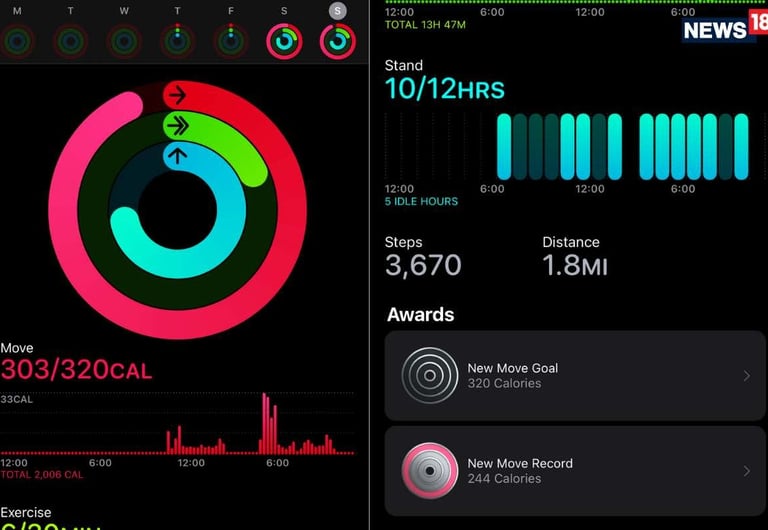
This monoculture extends beyond demographics into epistemology—the very ways we understand and approach longevity. The dominant paradigm treats the body as a machine requiring optimization, quantification, and control. Success is measured in biomarkers, measured in blood panels, evaluated through continuous glucose monitors and Oura rings. The subjective experience of aging, the wisdom traditions that have contemplated mortality for millennia, and the social determinants of health receive comparatively little attention in the longevity zeitgeist.
The Demographics of Forever
The longevity world's demographic uniformity isn't merely a cosmetic problem—it fundamentally shapes which questions get asked and which solutions get pursued. When your community consists primarily of high-income individuals with excellent baseline health, flexible schedules, and disposable income for expensive interventions, you naturally gravitate toward individualized, consumer-oriented approaches.
The typical longevity enthusiast can afford $500 monthly supplement regimens, comprehensive biomarker panels, hyperbaric oxygen therapy sessions, and perhaps a functional medicine physician on retainer. They have the time and resources to prepare elaborate meals optimized for nutrient density, to exercise with personal trainers, to experiment with various fasting protocols without worrying about their next meal. This creates a massive blind spot around the interventions that might benefit the majority of humanity.
Consider that the strongest predictors of longevity at a population level aren't exotic peptides or cutting-edge senolytics—they're basics like education, income, social connection, healthcare access, and environmental quality. Yet the longevity discourse devotes vastly more attention to debates about optimal leucine timing than to the fact that life expectancy gaps between rich and poor neighborhoods in American cities can exceed 20 years.
This demographic monoculture also manifests in who gets to be the face of longevity science. The field's most prominent public figures—Bryan Johnson, Peter Attia, David Sinclair, Andrew Huberman—are all accomplished men from similar professional backgrounds. While they've done valuable work popularizing longevity science, their singular prominence means that alternative perspectives, priorities, and approaches receive less visibility and validation.
The Protocol Paradox
Perhaps nowhere is the monoculture more apparent than in the remarkable convergence around specific interventions. Open any longevity-focused newsletter, podcast, or forum, and you'll encounter the same rotation of topics: rapamycin's mTOR inhibition, metformin's effects on AMPK, resveratrol and its more bioavailable cousin pterostilbene, NMN and NR for NAD+ boosting, senolytic combinations of dasatinib and quercetin.
There's nothing inherently wrong with investigating these compounds—many show genuine promise in research models. The problem lies in how they've become an almost canonical stack, with everyone pursuing variations on the same theme. This creates several concerning dynamics.
First, it generates groupthink and confirmation bias. When thousands of people are all trying similar interventions and sharing their experiences in echo chambers, spurious correlations get amplified while null results get quietly forgotten. The person who felt amazing after starting NMN shares their story enthusiastically; the person who noticed no difference likely just stops taking it without fanfare. This creates an illusion of effectiveness that may outstrip the actual evidence.
Second, the focus on specific molecules diverts attention from systemic approaches. The longevity community obsesses over compounds that might modulate particular aging pathways while paying comparatively little attention to the profound health impacts of community cohesion, purpose, stress reduction, or environmental toxin exposure. A pharmaceutical or supplement represents a discrete, controllable intervention—exactly the kind of thing that appeals to the engineering mindset that dominates longevity culture.
Third, this narrow focus creates market dynamics that may not serve human health optimally. Supplement companies rush to produce whatever the latest podcast episode highlighted. Research funding flows toward molecular interventions that can be patented rather than lifestyle or social interventions that can't generate comparable returns. The entire ecosystem becomes oriented around a particular kind of solution.
The Quantification Obsession
The longevity monoculture exhibits an almost religious devotion to measurement and quantification. Biomarkers become the ultimate arbiter of truth: if your ApoB is declining and your VO2 max is rising, you're succeeding at longevity regardless of how you actually feel. This mindset reflects the tech industry's "what gets measured gets managed" philosophy, transplanted onto human biology.
The appeal of quantification is understandable. Aging is a slow process, and we need proxies to evaluate whether our interventions are working before we actually reach old age. Blood tests, fitness assessments, and biological age calculators provide tangible feedback in a domain otherwise characterized by decades-long uncertainty.
Yet this emphasis on metrics has downsides that the longevity community rarely acknowledges. First, it privileges what's measurable over what's meaningful. We can quantify lipid particles and inflammatory markers, but we have crude tools at best for measuring vitality, resilience, or quality of life. The obsession with biomarkers can lead to optimizing for the test rather than for genuine health.
Second, excessive measurement can itself become a source of stress and anxiety—ironically undermining the very health we're trying to optimize. The person constantly checking their continuous glucose monitor, obsessing over sleep scores, and anxiously awaiting quarterly blood panels may be inducing chronic low-grade stress that overwhelms any benefit from their interventions.
Third, this quantification mindset tends to reduce aging to a collection of isolated subsystems that can be independently optimized, rather than recognizing the body as a complex, integrated whole where interventions in one area inevitably affect others in ways that may not be captured by our current biomarkers.
The Missing Perspectives
The longevity monoculture's most significant limitation may be its narrow range of intellectual traditions and methodological approaches. The field draws heavily from molecular biology, biochemistry, and clinical medicine, with some contributions from exercise physiology and nutritional science. What's largely absent are insights from public health, medical anthropology, psychology, sociology, and the various wisdom traditions that have contemplated aging for millennia.
Consider the Blue Zones research that identified regions where people routinely live past 100 in good health. These populations didn't achieve longevity through sophisticated supplement protocols or intensive biomarker tracking. The common threads were largely social and lifestyle factors: strong community bonds, sense of purpose, moderate daily physical activity integrated into normal life, plant-heavy traditional diets, and low chronic stress.
Yet the longevity community tends to treat Blue Zones as quaint anachronisms rather than as central examples to learn from. The implicit assumption seems to be that traditional approaches are fine for maintaining baseline health, but if you want to truly optimize and extend lifespan, you need modern interventions. This reflects a fundamentally progressive worldview that assumes newer is better and that technology can improve on natural processes.
Similarly absent from longevity discourse is serious engagement with how meaning, purpose, and psychological factors influence healthspan. We know from research that loneliness is as harmful to health as smoking 15 cigarettes per day, that having a sense of purpose predicts longevity, and that chronic stress accelerates cellular aging. Yet these factors receive a fraction of the attention devoted to optimizing omega-3 to omega-6 ratios.
The monoculture also lacks diverse cultural perspectives on aging itself. Western culture tends to view aging as a disease to be conquered, youth as the ideal state, and death as the ultimate enemy. Other cultures incorporate different relationships with aging—as a natural process bringing wisdom and social status, as an opportunity for spiritual development, as part of a broader cycle. These alternative frameworks might generate different priorities and approaches to extending healthy life.
The Reproducibility Crisis Comes to Longevity
The longevity field faces its own version of the reproducibility crisis plaguing broader science. Many of the most exciting findings in aging research have emerged from animal models—particularly mice—yet translating these results to humans has proven frustratingly difficult. Rapamycin extends lifespan in mice but we don't yet know if it does the same in humans. Caloric restriction works robustly in various model organisms but shows inconsistent effects in primates and humans.
The monoculture exacerbates this problem through its tendency toward premature consensus. When a study suggests that a particular compound extends lifespan in mice, the longevity community rapidly incorporates it into protocols before adequate human research exists. The subsequent lack of compelling human evidence then gets explained away rather than prompting serious reconsideration.
This pattern reflects confirmation bias and motivated reasoning. People who have already invested significant money, time, and identity into particular interventions face strong psychological pressure to maintain their beliefs even as evidence proves equivocal. The community's emphasis on individual experimentation ("n=1 trials") provides a convenient justification for continuing favored interventions regardless of what the broader evidence suggests.
The monoculture also creates financial incentives that work against scientific rigor. Supplement companies, testing services, and longevity clinics all benefit from maintaining enthusiasm about particular interventions. Influencers and content creators gain audiences by promoting exciting protocols rather than by counseling caution and humility about the limits of current knowledge. The entire ecosystem pushes toward overstating certainty and understating uncertainty.
The Accessibility Gap
Perhaps the most troubling aspect of longevity's monoculture is how it risks creating a two-tiered system where extended healthspan becomes a luxury good available primarily to the wealthy. When the most discussed interventions require significant disposable income and free time, we're not building a movement to extend human health broadly—we're creating an elite enclave of longevity optimization.
This trajectory becomes especially concerning as more powerful interventions emerge. If we develop therapies that genuinely extend healthspan significantly, will they be priced and distributed like vaccines and antibiotics—as public goods to be made widely available—or like luxury cosmetic procedures, available primarily to those who can pay? The current culture of longevity, with its focus on expensive individualized protocols, suggests we're heading toward the latter.
The monoculture's demographics and priorities mean that equity concerns receive relatively little attention. Discussions of how to make longevity interventions accessible to low-income populations, how to address the social determinants of health that drive most population-level disparities, or how to design policies that would distribute future breakthroughs broadly are peripheral at best in mainstream longevity discourse.
This represents a profound moral failure for a movement ostensibly dedicated to reducing human suffering. If longevity science succeeds in its grandest ambitions—developing interventions that substantially extend healthy lifespan—but those interventions remain available primarily to wealthy elites, we'll have created a new and perhaps unprecedented form of biological inequality.
Breaking the Monoculture
Addressing longevity's monoculture requires intentional efforts across multiple dimensions. Here are some starting points:
Demographic diversity: Longevity organizations, conferences, and media should actively recruit participants from diverse backgrounds—not just as representatives or tokens, but as equal contributors whose perspectives shape the field's priorities and approaches. This means addressing barriers to participation, from conference costs to the social dynamics that make some spaces unwelcoming to newcomers.
Intellectual diversity: The field needs serious engagement with disciplines beyond molecular biology and clinical medicine. Anthropologists, sociologists, psychologists, public health researchers, and scholars from various cultural and philosophical traditions should be central participants in longevity discourse, not peripheral voices occasionally consulted.
Intervention diversity: The longevity community should expand its focus beyond supplements and technological interventions to seriously investigate social, psychological, and lifestyle factors. This means funding research into community-building interventions, stress reduction approaches, environmental improvements, and other systemic changes that might extend healthspan.
Economic diversity: Developing accessible, low-cost interventions should be a central priority. This might mean more research into simple lifestyle modifications, advocacy for policies that address social determinants of health, or creating business models that make longevity services available regardless of ability to pay.
Epistemic humility: The field needs to be more honest about uncertainty and more resistant to premature consensus. This means better distinguishing between what we know with confidence, what looks promising but remains unproven, and what is essentially speculation. It means being willing to change positions when evidence shifts.
Systems thinking: Rather than treating aging as a collection of molecular pathways to be individually optimized, we need approaches that recognize biological and social complexity. This means studying interventions in realistic contexts, accounting for interactions between different factors, and recognizing that optimal health emerges from integrated systems rather than from optimizing isolated variables.
The ultimate irony of longevity's monoculture is that biological systems themselves thrive on diversity. Ecosystems with greater biodiversity prove more resilient and productive. Genetic diversity protects populations against novel threats. Cognitive diversity improves group problem-solving. If we want to solve the complex, multifaceted challenge of extending human healthspan, we need an intellectual and social ecosystem that mirrors the biological richness we're trying to preserve and extend.
The current monoculture represents a narrow bet on a particular set of approaches, methodologies, and priorities. This might work. Perhaps the molecular interventions currently receiving the most attention will prove genuinely transformative, but hedging our bets, pursuing multiple parallel approaches and incorporating diverse perspectives gives us a much better chance of actual success.
More fundamentally, a diverse longevity movement would be working toward a more desirable future. If extended healthspan arrives but only for a privileged subset of humanity, if it comes through approaches that medicalize and technicalize aging while ignoring its social and spiritual dimensions, if it optimizes biomarkers while degrading quality of life- then we will have achieved longevity in only the most impoverished sense.
The goal shouldn't just be more years, but better years and not just for the fortunate few but for humanity broadly. Achieving that requires escaping the monoculture and building a longevity movement that's as diverse, resilient, and vibrant as the lives we're hoping to extend.