Finding Your Zone of Genius Through Emotional Intelligence: Beyond the Mind, Into the Heart
Michael Donovan, PhD
12/5/20257 min read
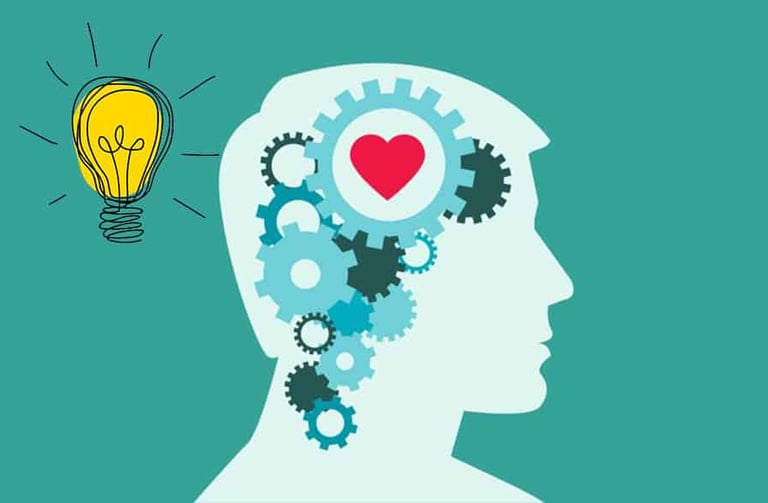

We've been taught to think our way to success. We analyze, strategize, and rationalize our path forward. We make pro-con lists, consult experts, and gather data. But what if the key to finding your zone of genius—that sweet spot where your natural talents meet deep fulfillment—isn't found in your head at all? What if it's been waiting in your emotional body this entire time?
The Limitation of Thinking Your Way to Your Genius
The concept of the "zone of genius" was popularized by Gay Hendricks in his book The Big Leap. He describes it as the space where you're doing work that you're uniquely suited to do, work that energizes rather than depletes you, and work that creates the most value with the least effort. Traditional approaches to discovering this zone involve intellectual exercises: assessments, personality tests, skills inventories, and logical deduction.
But here's the problem with purely cognitive approaches: your thinking mind is shaped by conditioning, societal expectations, and limiting beliefs. Your thoughts are filtered through years of "shoulds" and "supposed tos." Your rational mind might tell you that you're good at spreadsheets because you've done them for ten years, but it conveniently ignores the subtle heaviness you feel every time you open one.
The intellect is excellent at justification. It can convince you that you should pursue something because it's prestigious, lucrative, or practical. It can talk you into staying in your zone of competence—where you're good enough to get by—rather than risking the vulnerability of your true genius.
Your Emotions Are Data, Not Drama
We've been culturally conditioned to view emotions as problems to be managed, inconveniences to be suppressed, or at best, secondary considerations to be addressed after the "real" work of thinking is done. This is a profound misunderstanding of what emotions actually are.
Emotions are sophisticated intelligence systems. They're your body's way of communicating what matters to you, what aligns with your authentic self, and what violates your integrity. While your thinking mind can be fooled, manipulated, or confused by complex rationalizations, your emotional body knows the truth immediately.
When you're in your zone of genius, there's a distinct emotional signature. It's not necessarily constant happiness or ease—genuine genius work can be challenging. But there's an underlying sense of rightness, of energy flowing rather than being forced, of time becoming elastic rather than oppressive. Your emotional body recognizes when you're home.
The Emotional Signals of Your Zone of Genius
Learning to recognize your zone of genius through emotions requires developing a new kind of literacy. Here are the key emotional indicators:
Expansion vs. Contraction: Notice the physical sensation in your chest and belly when you think about different activities. Your zone of genius creates a sense of opening, breathing room, spaciousness. Activities outside this zone create subtle contraction, tightening, or closing off. This happens before your thinking mind even formulates an opinion.
Energy vs. Depletion: Track your energy levels not just at the end of a task, but during it. In your zone of genius, even difficult or challenging work has a quality of energizing you as you go. You might be tired afterward from exertion, but you're not depleted in that soul-deep way that comes from doing work that isn't yours to do.
Time Distortion: When you're operating in your genius, you enter what psychologist Mihály Csíkszentmihályi called "flow state." Emotionally, this feels like time becomes irrelevant. Hours pass like minutes. You look up and are surprised by how much time has passed. This emotional experience of timelessness is a powerful indicator.
Authentic Joy: This isn't forced positivity or manufactured enthusiasm. It's a quiet, grounded sense of "yes, this." It might coexist with frustration, challenge, or doubt, but underneath those surface emotions is a bedrock of genuine pleasure in the work itself.
Absence of Resentment: When you're in your zone of competence or excellence (but not genius), you'll often feel a subtle resentment. You can do the work, you might even do it well, but there's an emotional undertone of "why do I have to be the one to do this?" In your zone of genius, this resentment dissolves.
Magnetic Pull: Your genius work pulls you toward it. You think about it in the shower. You wake up with ideas. You feel emotionally drawn to it even when it's not convenient or practical. This magnetic quality is your emotional wisdom trying to guide you home.
The Four Zones Through an Emotional Lens
Hendricks identifies four zones: incompetence, competence, excellence, and genius. Each has a distinct emotional texture.
Zone of Incompetence: Emotionally, this feels like frustration mixed with inadequacy. There's a sense of swimming upstream, of constant effort with little progress. Your emotional body is sending clear signals: "This isn't for you." The tragedy is when we ignore these signals and keep pushing because we think we "should" be able to do something.
Zone of Competence: This is emotionally tricky because it doesn't feel bad enough to be obvious. It's the emotional equivalent of lukewarm water. You can do the work, so there's no acute distress, but there's also no aliveness. Many people spend their entire careers here because the emotional signal is just a low-grade numbness rather than outright pain.
Zone of Excellence: Here's where the emotional confusion really sets up camp. Work in your zone of excellence often feels good. You receive praise, recognition, compensation. The external validation creates positive feelings. But if you tune in carefully, there's often an emotional hollowness underneath the surface satisfaction. It's like eating food that looks beautiful but doesn't really nourish you.
Zone of Genius: The emotional quality here is unmistakable once you've experienced it. It's a sense of alignment, of being in the right place doing the right thing. Even when the work is difficult, there's an emotional coherence, a feeling of "I was made for this."
Developing Emotional Awareness to Find Your Genius
If you've spent years or decades overriding your emotional intelligence, how do you begin to access it again?
Create Space for Feeling: You can't hear emotional signals when you're constantly distracted or numbed. Practice moments throughout your day where you simply check in with your body. What are you feeling? Where are you feeling it? No judgment, no fixing, just noticing.
Track Your Emotional Energy: For one week, keep an emotional energy journal. After different activities, note not just what you did but how you felt doing it. Rate your energy level from one to ten. Notice the quality of your emotional state. Patterns will emerge.
Follow Your Jealousy: Jealousy is an underrated emotional compass. When you feel envious of someone else's work or life, your emotional body is telling you something about your own unlived potential. Instead of suppressing jealousy, get curious about it. What specifically triggers that response? That's emotional data pointing toward your genius.
Notice What You Judge: We often harshly judge in others what we've suppressed in ourselves. If you find yourself dismissing certain types of work as frivolous, impractical, or self-indulgent, your emotional reaction might be pointing to something you've denied yourself permission to explore.
Pay Attention to Ease: We've been conditioned to believe that if something comes easily, it doesn't count. But ease is often the primary emotional indicator of genius. What feels so natural to you that you barely consider it a skill? What do others struggle with that you find straightforward? The emotional experience of ease is your body's way of saying "this is your path."
The Courage to Trust Emotional Knowing
The biggest obstacle to finding your zone of genius through emotional intelligence isn't the difficulty of feeling—it's the courage to trust what you feel in a world that demands rational justification for everything.
You might feel emotionally called to work that doesn't make logical sense. The pay might be lower. The prestige might be less. Your family might not understand. Your thinking mind will present you with a thousand reasons why you shouldn't follow that emotional pull.
This is where you have to make a choice. Do you trust the sophisticated intelligence of your emotional body, or do you default to the conditioned thinking that's kept you playing small?
Many people report that their zone of genius became obvious only in retrospect, when they finally gave themselves permission to follow what felt right rather than what seemed smart. The thinking mind catches up later, but the emotional knowing leads the way.
When Emotions Mislead: The Importance of Discernment
This isn't to say that every emotional impulse should be followed without question. There's an important distinction between emotional intelligence and emotional reactivity.
Fear, for instance, can be both a signal to pay attention and a habitual pattern that keeps you stuck. The key is learning to distinguish between fear that's warning you of genuine danger and fear that's simply resisting growth. Usually, the fear that's protecting you from real harm feels sharp and immediate. The fear that's keeping you from your genius feels chronic and vague.
Similarly, comfort isn't always an indicator of genius. Sometimes your zone of genius lies just beyond your comfort zone, and your emotional work is to learn to tolerate the discomfort of growth while still honoring the deeper sense of rightness underneath.
Emotional intelligence requires developing what we might call "emotional discernment"—the ability to feel fully while also having enough awareness to interpret those feelings wisely.
The Integration: Emotions Inform, Thinking Implements
The goal isn't to abandon thinking altogether. The intellect has an important role—it's just not the leadership role we've assigned it.
Your emotional intelligence identifies your zone of genius. Your thinking mind then helps you develop strategies, set boundaries, build skills, and create structures that allow you to operate more fully in that zone. Emotions provide direction; thinking provides navigation.
This partnership between emotional knowing and cognitive skill is where real magic happens. You're no longer trying to think your way to fulfillment or feel your way through complex decisions without any structure. Instead, you're using each form of intelligence for what it does best.
Your Zone of Genius Is Waiting
Your zone of genius isn't something you need to construct through careful analysis or strategic planning. It already exists. It's been waiting for you to notice it, and the clearest signal system you have for recognition is your emotional body. Stop trying to think your way there. Start feeling your way home.
The next time you're faced with a decision about your work, your projects, or your life direction, try this: before you make a pro-con list, before you consult experts, before you analyze the data, sit quietly and notice how each option feels in your body. Notice which one creates that sense of expansion, that quality of rightness, that subtle spark of alive energy.
That feeling—that's your genius calling. It's been speaking all along. The question is: are you finally ready to listen?
Your zone of genius isn't hiding from you. It's alive in every moment you feel truly yourself, energized rather than depleted, aligned rather than forced. It's in the work that makes time disappear and brings you alive. It's been communicating through your emotions your entire life.
Trust the wisdom of what you feel. Your emotional intelligence already knows the way.