The Age of Sentiment: How Feelings Conquered Facts in Markets, Politics, and Beyond
Michael Donovan, PhD
3/2/202621 min read
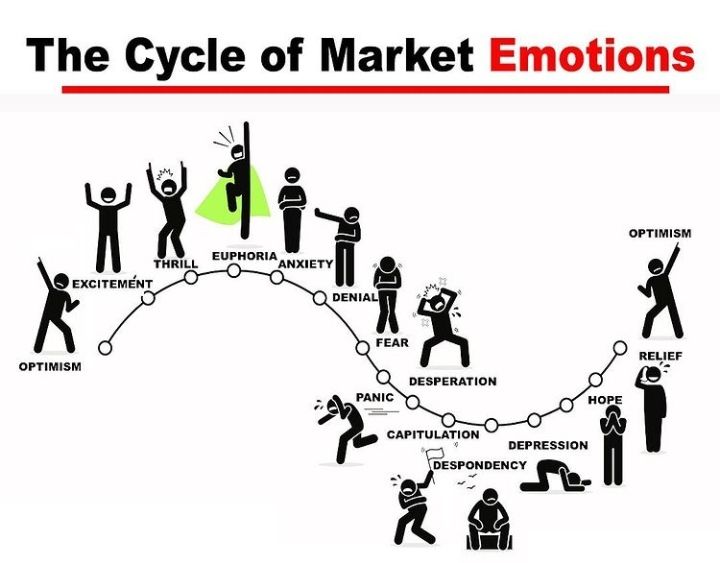
In the spring of 2021, a struggling video game retailer became the most talked-about stock on Wall Street. GameStop's meteoric rise had nothing to do with improving fundamentals, competitive advantages, or discounted cash flow models. It was driven entirely by sentiment—by retail traders on Reddit who believed in the stock, memed it into existence, and forced the hand of billion-dollar hedge funds. The technical analysts were baffled. The fundamental investors were bewildered. But the sentiment traders were printing money.
This wasn't an aberration. It was a revelation of the world we now inhabit.
Across domains—from financial markets to electoral politics, from corporate valuations to foreign policy—we've entered an era where sentiment has eclipsed both factual analysis and technical expertise as the primary driver of outcomes. The question isn't whether this is good or bad. The question is: how did we get here, and what does it mean for how we navigate these systems?
The Myth of the Rational Actor
For decades, our models of human behavior were built on a comfortable fiction: that people are rational actors who process information objectively and make decisions that maximize their self-interest based on facts. Economists built elaborate theories on this premise. Political scientists modeled voter behavior accordingly. Financial analysts assumed markets priced in all available information efficiently.
Reality was always messier than the models suggested, but for a long time, the gap was manageable. Enough people behaved rationally enough of the time that the system functioned as if the assumptions were true. Facts mattered because they informed rational decisions. Technical analysis worked because patterns reflected underlying economic realities.
Then something shifted.
The shift wasn't sudden—it was cumulative, the result of technological, social, and psychological forces that had been building for decades. But somewhere in the 2010s, we crossed a threshold. Sentiment stopped being a secondary factor that occasionally disrupted rational systems. It became the primary operating system itself.
The Information Paradox: Too Much Data, Too Little Truth
The digital revolution promised to democratize information and create a more informed citizenry. In many ways, it delivered. We have unprecedented access to data, research, expert analysis, and primary sources. A curious teenager with a smartphone has more information at their fingertips than a university researcher had thirty years ago but we got something unexpected alongside all that information: information overload, followed by information exhaustion, and ultimately information tribalism.
When everyone has access to infinite information, information itself loses value as a differentiator. What becomes valuable instead is interpretation, narrative, and identity. Facts become weapons in arguments rather than foundations for understanding. You don't need to win a debate with superior data anymore—you need to win it with superior sentiment mobilization.
Consider how this plays out in political discourse. On virtually any contentious issue—climate change, economic policy, healthcare, foreign intervention—both sides can muster impressive-looking statistics, expert testimonials, and historical precedents. The problem isn't a lack of facts. It's that facts have become so abundant and contradictory (or made to appear contradictory) that people increasingly choose their facts based on pre-existing sentiment rather than forming sentiment based on facts.
This isn't necessarily because people are stupid or willfully ignorant. It's because the cognitive cost of independently verifying every claim in our information-saturated environment is impossibly high. So we develop shortcuts—and those shortcuts are increasingly sentiment-based. Does this information come from someone like me? Does it confirm what my trusted community believes? Does it feel true?
The Social Media Amplification Engine
If information overload created the conditions for sentiment to gain power, social media provided the infrastructure for sentiment to dominate.
Social media platforms are, at their core, sentiment amplification machines. Their algorithms aren't designed to surface the most accurate information or the most technically sound analysis. They're designed to surface content that generates engagement—and nothing generates engagement quite like emotional resonance.
A meticulously researched policy paper might get 200 views. A emotionally charged video about the same topic—regardless of accuracy—can get 2 million. The algorithm learns quickly: sentiment wins, nuance loses.
This creates a feedback loop. Content creators learn to prioritize emotional impact over factual precision. Audiences learn to expect and respond to sentiment-first narratives. The platforms optimize for ever-more-engaging (read: emotionally provocative) content. Traditional gatekeepers—editors, fact-checkers, expert validators—are disintermediated, removing friction from the spread of sentiment-based narratives.
The result is an information ecosystem where sentiment spreads at the speed of light while facts plod along behind, arriving too late to the party to make a difference.
The Financialization of Everything—And the Sentimentalization of Finance
Nowhere is the triumph of sentiment more visible than in financial markets, which were supposed to be the ultimate rational space, governed by cold calculation and mathematical models.
The efficient market hypothesis held that markets instantly price in all available information. Technical analysis assumed that price patterns reflected underlying supply and demand dynamics rooted in fundamental value. For a long time, this framework mostly worked. When it didn't—during bubbles and crashes—we treated those as aberrations, pathologies to be studied and prevented, but something changed in the 2010s, accelerating dramatically during the pandemic. Markets became increasingly detached from traditional fundamentals, driven instead by sentiment, narrative, and what venture capitalist Bill Gurley called "the absence of fear."
Consider the metrics. Companies with no profits commanded market capitalizations larger than profitable blue-chip corporations. Cryptocurrencies with no intrinsic value whatsoever—explicit jokes in some cases—reached billions in market cap. Special Purpose Acquisition Companies (SPACs) raised hundreds of millions based on the reputation and charisma of their sponsors, with no actual business to evaluate.
The traditional investors were incredulous. "This makes no sense," they said, pointing to price-to-earnings ratios, discounted cash flows, and historical precedents. And they were right—it made no sense according to traditional frameworks. But it made perfect sense in a sentiment-driven market.
The GameStop saga crystalized this new reality. A decentralized group of retail traders, coordinating on Reddit's WallStreetBets forum, collectively decided to pump a stock based not on analysis but on belief, humor, and rebellious sentiment against Wall Street institutions. They succeeded spectacularly, forcing multi-billion dollar hedge funds to unwind positions at massive losses.
The technical analysts had no framework to explain this. Their charts and indicators couldn't predict a mass sentiment movement organized through social media. The fundamental analysts had no tools to model it. Their DCF models couldn't incorporate Reddit karma and meme energy as variables.
The lesson was clear: in modern markets, sentiment isn't noise to be filtered out—it's signal itself. Maybe the most important signal.
Political Disruption and the Sentiment Candidate
The political sphere underwent a parallel transformation. Traditional political analysis focused on policy positions, demographic coalitions, ground game organization, and advertising reach. Candidates were vetted by party establishments, and success required building consensus across multiple interest groups.
Then social media enabled direct communication between candidates and voters, disintermediating traditional media and party structures. Suddenly, a candidate could build a movement through pure sentiment mobilization, bypassing the establishment entirely.
Donald Trump's 2016 campaign was the proof of concept, but the phenomenon transcends any individual or ideology. Trump won not because he had superior policy papers or organizational infrastructure—by traditional metrics, his campaign was chaotic and underfunded. He won because he understood sentiment better than his opponents. He knew that an emotionally resonant message delivered authentically (even if factually questionable) would defeat a technically superior but emotionally flat message every time.
His supporters didn't primarily support him because of detailed policy positions—many couldn't articulate his policies in detail. They supported him because he made them feel a certain way. He channeled their frustrations, their identity, their sense of being unheard. The sentiment was the message.
This wasn't limited to one side of the political spectrum. Bernie Sanders built a comparable movement on sentiment—anger at economic inequality, hope for systemic change, identity as part of a political revolution. His detailed policy papers were available, but his movement was powered by how people felt about the rigging of the system and the possibility of transformation.
Meanwhile, candidates who were arguably more qualified, more experienced, and more policy-sophisticated floundered because they couldn't generate comparable sentiment. Hillary Clinton's "I'm With Her" paled next to "Make America Great Again" not because it was less accurate or less policy-aligned—but because it generated less powerful sentiment.
The 2024 election continued this pattern. Kamala Harris lost despite access to vastly more campaign resources and institutional support, in part because she couldn't match Trump's ability to generate and channel sentiment. The facts of Trump's legal troubles, his past presidency, his policy inconsistencies—none of it mattered as much as the sentiment he mobilized.
Political analysts who focus on policy positions, demographics, and institutional factors keep getting surprised by outcomes. Those who understand sentiment dynamics have a much better track record. The smart money in politics has learned: sentiment is the game, everything else is commentary.
The Economics of Attention in a Post-Scarcity Information World
Understanding how we arrived at sentiment dominance requires grasping a fundamental economic shift: information moved from scarcity to superabundance, which changed what's actually valuable.
In a world of information scarcity, facts were precious commodities. Getting access to data, research, or expert analysis provided genuine competitive advantage. Institutions that could gather and process information—newspapers, research firms, financial analysts—held real power, but we now live in an information post-scarcity world. The bottleneck isn't access to facts—it's attention. There are more facts available than anyone could possibly process. The scarce resource is human attention and the ability to capture it.
Sentiment is extraordinarily efficient at capturing attention. A fact is inert—it sits there waiting for someone to notice it, consider it, and integrate it into their worldview. Sentiment is active—it grabs you, demands a response, spreads itself through your networks.
This creates a competitive advantage for sentiment-based communication in any attention economy. In finance, a sentiment-driven narrative about a stock spreads faster and captures more investment attention than a detailed fundamental analysis. In politics, a sentiment-driven message reaches more voters and generates more engagement than a nuanced policy proposal. In media, a sentiment-driven story gets more clicks and shares than a carefully reported investigation.
The system evolves to reward what works. Slowly but inevitably, participants across domains learn to prioritize sentiment because it's more effective at achieving their goals in an attention economy.
The Decline of Institutional Authority
Another crucial factor in sentiment's rise was the declining authority of traditional institutions and experts who once served as validators of facts and checks on pure sentiment.
Trust in major institutions—government, media, academia, corporations—has declined sharply over recent decades. There are legitimate reasons for this decline, including institutional failures, corruption, and elitism. But the consequence is that traditional validators of factual information have lost their privileged position. When Walter Cronkite said "and that's the way it is," millions of Americans believed him. There was a shared epistemological foundation. When experts reached consensus on a topic, that consensus carried weight with the public.
That authority is largely gone. Now, when mainstream media reports something, a large portion of the population's first instinct is skepticism—not unreasonable skepticism about specific claims, but categorical skepticism about the institution itself. When experts reach consensus, many see it not as validated truth but as "the establishment narrative."
Into this authority vacuum rushed alternative information sources—social media influencers, podcast hosts, Substack writers, YouTube personalities. These new authorities derive legitimacy not from institutional credentials but from sentiment alignment. People trust sources that feel aligned with their values, identity, and worldview, regardless of technical expertise.
This isn't entirely irrational. Institutions did fail repeatedly. Experts were wrong about important things. The media did display bias. But the replacement of institutional authority with sentiment-aligned authority hasn't produced better information—it's produced more emotionally satisfying information.
The Feedback Loop: When Sentiment Creates Its Own Reality
Perhaps the most fascinating aspect of sentiment dominance is that it's self-reinforcing. Sentiment doesn't just interpret reality—in many domains, it creates reality.
In financial markets, this is obvious. If enough people believe a stock will go up and act on that belief, the stock goes up. The sentiment becomes self-fulfilling. GameStop's price had nothing to do with GameStop's business fundamentals—but the price action itself became a real factor that the company could leverage for fundraising and strategic options.
The same dynamic operates in politics. If enough people believe a candidate can win, that belief generates enthusiasm, which generates donations and volunteer energy, which generates media coverage, which generates more belief in the candidate's viability. The sentiment creates the reality it anticipated.
Even in seemingly fact-based domains, sentiment can reshape reality. If enough people believe the economy is in recession, they pull back spending, which causes economic contraction, which validates the recession belief. If enough people believe a scientific consensus is politically motivated, they reject it, which shapes policy, which affects outcomes.
This creates a world where being "right" about facts becomes less important than understanding and mobilizing sentiment. The person who correctly identifies that a stock is overvalued on fundamentals but misses the sentiment wave loses money. The person who recognizes fundamentals don't matter as much as sentiment makes money.
The politician who has the best policies but can't generate sentiment loses. The politician who generates powerful sentiment regardless of policy quality wins.
The Technical Analysts' Dilemma
Technical analysis in finance provides an instructive case study for what happens when sentiment overwhelms traditional analytical frameworks.
Technical analysis is built on the idea that price patterns reflect market psychology and underlying supply-demand dynamics. It works (when it does) because it identifies recurring patterns in how humans collectively behave in markets. It's not about fundamentals—it's about psychology, but technical analysis was developed in an era when market psychology unfolded at a different pace and scale. Charts and patterns emerged over weeks and months. Trading was dominated by professional investors and institutions who brought at least some analytical rigor to their decisions.
The new sentiment-driven markets move faster and more erratically than traditional technical analysis can handle. Meme stocks can shoot up or crash in hours based on social media momentum, with no technical pattern to predict it. Cryptocurrencies can 10x or halve based on a single tweet from a influential figure. Options traders on Reddit can coordinate to trigger gamma squeezes that force market makers into impossible positions.
Technical analysts find themselves in a strange position: their frameworks still work sometimes, in some markets, but increasingly they miss the biggest moves because those moves are driven by sentiment dynamics that technical analysis wasn't designed to capture.
Some technical analysts have adapted, incorporating social media sentiment tracking, Reddit forum analysis, and crypto community monitoring into their frameworks. Others have doubled down on traditional methods and consistently missed the most spectacular opportunities and risks of the past five years.
The same pattern plays out across domains. Traditional frameworks aren't completely useless—they still work in certain contexts—but they increasingly miss the most important dynamics because they were built for a different era with different dominant forces.
Why Facts and Analysis Still Matter (Just Not How You Think)
None of this means facts are irrelevant or that technical analysis is dead. It means their role has changed. Facts matter enormously—but primarily as raw material for sentiment construction. The most effective sentiment-based narratives incorporate real facts, but they select and frame those facts to maximize emotional resonance rather than comprehensive accuracy.
Consider how this works in political campaigns. Effective political messaging doesn't ignore facts—it cherry-picks the facts that support the desired sentiment while downplaying contradictory facts. "Crime is up" might be technically true for certain categories in certain jurisdictions during certain time periods, but its power in political messaging comes from how it makes people feel, not from its statistical nuance.
Similarly, in financial markets, the best sentiment-driven investment narratives incorporate real information about products, markets, or technologies. Tesla bulls don't ignore facts about EV adoption or battery technology—they selectively emphasize facts that support a compelling growth story while dismissing concerns as FUD (fear, uncertainty, doubt).
Technical analysis still has value, but increasingly as one input among many rather than as the primary analytical framework. A trader who ignores sentiment entirely will get crushed. But a trader who ignores technical factors entirely will also miss important signals. The sophistication lies in weighing multiple factors appropriately—and right now, sentiment deserves more weight than traditional frameworks allocated to it.
The Psychology Underneath: Why Sentiment Resonates
The triumph of sentiment isn't just about information technology or institutional decline. It taps into something deeper about human psychology that was always true but is now more fully expressed.
Humans are not primarily rational beings who occasionally get emotional. We're emotional beings who occasionally engage in rational analysis. Our brains evolved to make rapid decisions based on limited information in life-or-death situations. Pattern recognition, gut instinct, emotional resonance—these cognitive tools kept our ancestors alive.
Abstract reasoning, statistical analysis, technical frameworks—these are recent evolutionary additions, cognitively expensive, and engaged only when necessary. Given a choice between an emotionally resonant simple narrative and a technically complex analysis, our brains naturally prefer the former. It takes less energy. It feels more certain. It connects to identity and social belonging in ways that abstract analysis never can.
For most of human history, this didn't matter much in collective decision-making because most humans had little say in collective decisions. Elites who did have influence were trained in rational frameworks and could insulate their decisions from mass sentiment, but we've democratized decision-making while simultaneously creating technologies that amplify and accelerate sentiment. The result is that our natural psychological tendencies toward sentiment-based thinking now directly shape outcomes in finance, politics, and other domains in ways they never did before.
We haven't fundamentally changed as humans—we've just removed the buffers that previously moderated sentiment's influence on important decisions.
The Illusion of Control and the Comfort of Narrative
Another psychological factor driving sentiment's power is our deep need for narrative coherence and sense of control.
Markets, politics, and social systems are extraordinarily complex—so complex that genuine understanding is often impossible. Even experts with decades of experience and sophisticated models regularly get major predictions wrong. The world is more chaotic and unpredictable than we're comfortable admitting.
Sentiment-based narratives offer something that technical analysis and factual complexity cannot: emotional certainty. They provide simple stories that make sense of chaos. They offer clear villains and heroes. They promise that if we just believe hard enough or act decisively enough, we can control outcomes.
"The economy is bad because of [group I already dislike]" is psychologically more satisfying than "the economy is influenced by hundreds of interconnected factors including monetary policy, global supply chains, technological change, demographic shifts, geopolitical events, and random shocks, with complex feedback loops that make attribution extremely difficult."
"This stock will moon because retail is taking down Wall Street" is more emotionally resonant than "this stock's price reflects a temporary imbalance between sentiment-driven buying pressure and institutional short covering, with unpredictable duration and magnitude, subject to regulatory intervention and shifting social media dynamics."
The technical analysis and factual complexity might be more accurate, but they don't satisfy our psychological need for narrative clarity and sense of agency. Sentiment-based narratives do.
When Sentiment Goes Wrong: The Costs of Sentiment-Driven Systems
The dominance of sentiment over facts and technical analysis isn't cost-free. While sentiment-aligned positions can generate spectacular returns and political victories, they also create distinctive pathologies.
In markets, sentiment-driven bubbles and crashes become more extreme and more frequent. Assets disconnect entirely from fundamental value, creating spectacular wealth and destroying it just as quickly. Retail traders who rode sentiment to massive gains can lose everything just as fast when sentiment shifts. The GameStop traders who bought at $400 suffered as much as those who bought at $20 profited.
The crypto market exemplifies this. Fortunes were made and lost based almost entirely on sentiment, narrative, and memes. People became millionaires because they bought into the right sentiment at the right time. People lost their life savings because they believed the sentiment would last forever. Technical analysis and fundamental value were almost completely irrelevant to outcomes.
In politics, sentiment-driven systems are vulnerable to manipulation by those who understand sentiment mechanics. Demagogues throughout history have exploited emotional appeals over rational argument. The difference now is that sentiment can be engineered and amplified at unprecedented scale through social media.
When voters make decisions based primarily on sentiment rather than policy analysis, they often get policies they don't actually want. People vote for candidates based on how they feel about them, then are surprised when those candidates implement policies contrary to the voters' interests. The sentiment mobilization succeeds, but the actual governance fails.
Sentiment-driven politics also tends toward polarization and instability. When politics is primarily about emotional identity rather than policy negotiation, compromise becomes betrayal. Every issue becomes existential. The political temperature rises, institutional norms erode, and the system becomes more fragile.
The Expertise Trap: When Being Right Doesn't Matter
One of the most frustrating consequences of sentiment dominance is what we might call the expertise trap: being technically correct becomes a liability if it puts you on the wrong side of sentiment.
The financial analysts who correctly identified that GameStop was overvalued at $20 were even more correct when it hit $400—but they lost enormous amounts of money if they acted on that analysis. Their expertise was perfect. Their results were disastrous. Being right about the facts and wrong about the sentiment is the worst possible combination.
The same plays out in politics. Policy experts who design technically superior solutions to complex problems lose elections to candidates with emotionally resonant but practically unworkable proposals. The experts are right about the policy. They're wrong about what matters electorally.
This creates a perverse incentive structure. Expertise in traditional analysis becomes less valuable. Understanding sentiment dynamics becomes more valuable. People who invested years in developing technical skills find those skills matter less than the ability to read and mobilize sentiment.
Some experts adapt by learning to translate their technical expertise into sentiment-resonant narratives. Others become increasingly bitter and frustrated as their expertise gets repeatedly overridden by sentiment-based decisions they see as irrational.
The expertise trap also creates a broader social problem: it devalues expertise itself. Why invest years becoming genuinely knowledgeable about a domain if sentiment matters more than knowledge? Why develop technical skills if those skills don't translate to outcomes? The long-term consequence may be a decline in technical expertise across domains, as rational actors realize expertise no longer provides the returns it once did.
Digital Natives and the Sentiment-First Generation
The generational dynamics of sentiment dominance are worth examining. People who came of age in the pre-digital era often experience the shift to sentiment-driven systems as a degradation—a falling away from previous standards of rationality and factual rigor, but digital natives don't experience it as a degradation because they never internalized the previous system. For younger generations, sentiment-first decision-making is simply how the world works. They're often far more sophisticated at navigating sentiment dynamics than their elders, even if they're less trained in traditional analytical frameworks.
This creates interesting generational divides. Older financial analysts insist that fundamentals matter and eventually reassert themselves. Younger traders treat fundamentals as largely irrelevant and focus on sentiment indicators, social media momentum, and meme potential. The younger traders have generally outperformed over the past five years, not because they're smarter but because they better understand the system they're actually operating in.
Similarly in politics, younger voters often bewilder older political analysts by supporting candidates who seem to violate every conventional rule of electability. But younger voters aren't applying conventional frameworks—they're responding to sentiment, authenticity signaling, and identity alignment in ways that traditional political science doesn't easily capture.
There's a skills transfer happening, but it's not the one older generations expected. The valuable skills being passed down aren't primarily technical analysis or policy expertise. They're skills in sentiment reading, narrative construction, community building, and emotional resonance. These are skills, and they can be developed—they're just different skills than previous generations valued most highly.
The Pendulum Question: Will Sentiment Dominance Last?
A crucial question: is sentiment dominance a permanent shift, or will the pendulum swing back toward facts and technical analysis?
The honest answer is nobody knows, but we can identify factors that might push in each direction.
Forces suggesting sentiment dominance will persist or deepen:
First, the technological infrastructure that amplifies sentiment isn't going away. Social media will continue to evolve, but the fundamental dynamic—algorithms that optimize for engagement, which favors sentiment—seems likely to remain.
Second, the information overload that makes facts less valuable shows no signs of abating. We're generating more information, not less. The attention economy will remain an attention economy.
Third, the psychological drives toward sentiment-based thinking are hardwired. We're not going to evolve into different creatures. If anything, as life becomes more complex and uncertain, the comfort of emotionally resonant narratives may become more appealing, not less.
Fourth, younger generations are being trained in sentiment-first systems from adolescence. As they age into positions of influence, they'll continue operating according to sentiment-based logic because that's what they know.
Forces suggesting a potential shift back toward facts and technical analysis:
First, sentiment-driven systems can produce spectacular failures that generate corrective pressure. If enough people lose enough money in sentiment-driven market crashes, or if enough voters become disillusioned with sentiment-elected politicians who can't govern, there may be appetite for returning to more traditional frameworks.
Second, there may be technological developments that help us navigate information overload more effectively—AI assistants that can process vast amounts of information and present genuinely useful synthesis, for instance. This could reduce the cognitive cost of engaging with facts.
Third, institutional adaptation is possible. Media organizations, educational institutions, and financial firms could develop new frameworks that integrate sentiment awareness while maintaining factual rigor. Rather than fighting sentiment or ignoring facts, future institutions might develop sophisticated approaches that navigate both.
Fourth, there's some evidence of sentiment fatigue—people exhausted by the emotional intensity of sentiment-driven systems. This could create demand for calmer, more fact-based approaches.
My suspicion is that we won't return to the previous equilibrium where facts and technical analysis clearly dominated, but we may reach a new equilibrium where sentiment is acknowledged as a primary factor and integrated into more sophisticated frameworks rather than treated as noise or irrationality.
Navigating the Sentiment-Driven World
Whether you celebrate or lament sentiment's dominance, it's the reality we're operating in. The practical question becomes: how do you navigate effectively?
In financial markets, the answer is increasingly clear: don't fight sentiment, but don't ignore fundamentals entirely. The most successful investors in recent years have combined sentiment awareness with risk management and fundamental reality checks. They ride sentiment waves but have exit strategies. They recognize when sentiment is creating opportunities and when it's creating traps.
Importantly, they don't moralize about sentiment being "wrong." They accept it as a feature of markets they need to understand, just as previous generations accepted that they needed to understand business cycles or interest rate impacts.
In politics, candidates and campaigns that succeed will be those that master sentiment mobilization while maintaining enough connection to policy reality to actually govern. Pure sentiment with no governing capacity eventually collapses—but governing capacity without sentiment mobilization never gets the chance to try.
For voters and citizens, the challenge is harder: how do you participate in a sentiment-driven political system without being purely manipulated by sentiment? How do you let sentiment inform your views while retaining some capacity for rational evaluation?
There's no perfect answer, but awareness helps. Recognizing when you're being moved by sentiment rather than facts doesn't eliminate the sentiment—our emotions don't work that way—but it can create space for reflection. Am I supporting this because it makes logical sense, or because it makes me feel good? Both are valid reasons, but knowing which is which is valuable.
For institutions and experts, adaptation is essential. Organizations that cling to purely fact-based, sentiment-blind approaches will continue to be blindsided by outcomes. Those that dismiss facts entirely in favor of pure sentiment manipulation will lose credibility. The successful institutions will develop frameworks that genuinely integrate both.
This might mean journalists who understand how to present factually accurate information in emotionally resonant ways without sacrificing truth. Financial analysts who incorporate sentiment indicators alongside traditional metrics. Political strategists who build on authentic sentiment rather than manufacturing artificial emotional manipulation.
The Deeper Philosophical Question
Beneath all the practical considerations lies a deeper philosophical question: should we resist sentiment's dominance, or accept and work within it?
There's a traditionalist position that says sentiment-driven decision-making is degraded decision-making. Facts and rational analysis may be harder and less emotionally satisfying, but they're more likely to produce good outcomes. From this view, sentiment dominance is a problem to be solved, not a reality to be embraced.
There's a pragmatic position that says it doesn't matter whether sentiment dominance is good or bad—it's real. Fighting reality is foolish. The sophisticated approach is to understand the world as it actually is and operate effectively within it and there's a deeper, more challenging position: maybe sentiment was always more important than we admitted, and the previous era of apparent fact-dominance was itself an aberration or an illusion. Maybe human systems were always fundamentally sentiment-driven, but we told ourselves stories about rational decision-making because those stories were themselves emotionally satisfying.
From this perspective, what's changed isn't that sentiment replaced facts as the dominant force—it's that sentiment's dominance has become impossible to ignore or deny. The emperor always had no clothes; we've just collectively stopped pretending otherwise.
Each of these positions has merit, and which you embrace depends on your deeper beliefs about human nature, social systems, and epistemology. But what's undeniable is that we can no longer conduct business, politics, or cultural discourse as if facts and technical analysis alone determine outcomes.
Conclusion: The World We've Built
We live in a world where a meme can move markets, where emotional resonance defeats policy expertise, where viral sentiment can topple institutions that took centuries to build. This isn't a temporary aberration or a passing phase—it reflects deep structural shifts in how information flows, how attention is allocated, and how decisions get made.
The rise of sentiment over facts and technical analysis isn't simply about people becoming less rational. It's about the creation of new systems—technological, social, economic—that inherently favor sentiment-based dynamics. Social media algorithms optimize for engagement. Attention economics reward emotional resonance. Democratic systems amplify popular sentiment. Financial markets increasingly reflect collective belief rather than fundamental value.
These systems won't be easily changed, because they emerge from the interaction of human psychology with modern technology and institutional structures. We can't turn back the clock to a pre-digital information environment. We can't reverse the democratization of voice and influence that social media enabled. We can't return to an era of unquestioned institutional authority.
What we can do is develop better frameworks for understanding and navigating sentiment-driven systems. We can become more sophisticated about recognizing when we're being moved by sentiment versus facts. We can build institutions and technologies that help people navigate this terrain more effectively. We can teach the next generation not just to analyze facts, but to understand sentiment dynamics.
The fundamental insight is this: in an age of information superabundance and attention scarcity, sentiment isn't just one factor among many—it's often the dominant factor. Markets don't just occasionally detach from fundamentals during bubbles; they're increasingly sentiment-driven as the norm. Politics isn't just periodically disrupted by emotional populism; it's increasingly organized around sentiment mobilization. Culture wars aren't just about ideas; they're primarily about sentiment and identity.
This doesn't mean facts don't matter. Facts remain the raw material from which persuasive narratives are constructed. Technical analysis still provides valuable inputs for decision-making. But facts and technical analysis alone, divorced from sentiment awareness, are increasingly insufficient for understanding or influencing outcomes.
The winners in this environment—in markets, politics, culture, and beyond—will be those who master both domains: who understand sentiment deeply while remaining grounded in reality, who can mobilize emotions while maintaining ethical boundaries, who can ride sentiment waves while keeping risk in check.
The losers will be those who fight the reality of sentiment dominance out of nostalgia for a different era, or those who embrace sentiment completely while severing all connection to factual reality. Both pure fact-worship and pure sentiment-manipulation are losing strategies.
We're still early in this transformation. The dust hasn't settled. New norms, institutions, and frameworks are still emerging. The equilibrium between sentiment and facts is still being negotiated. But the direction is clear: sentiment has claimed its throne, and we're all learning to navigate the kingdom it rules.
The sooner we accept this reality—not as something to celebrate or mourn, but simply as reality—the sooner we can develop the sophistication needed to thrive in the world we've actually built, rather than the world we thought we were building.